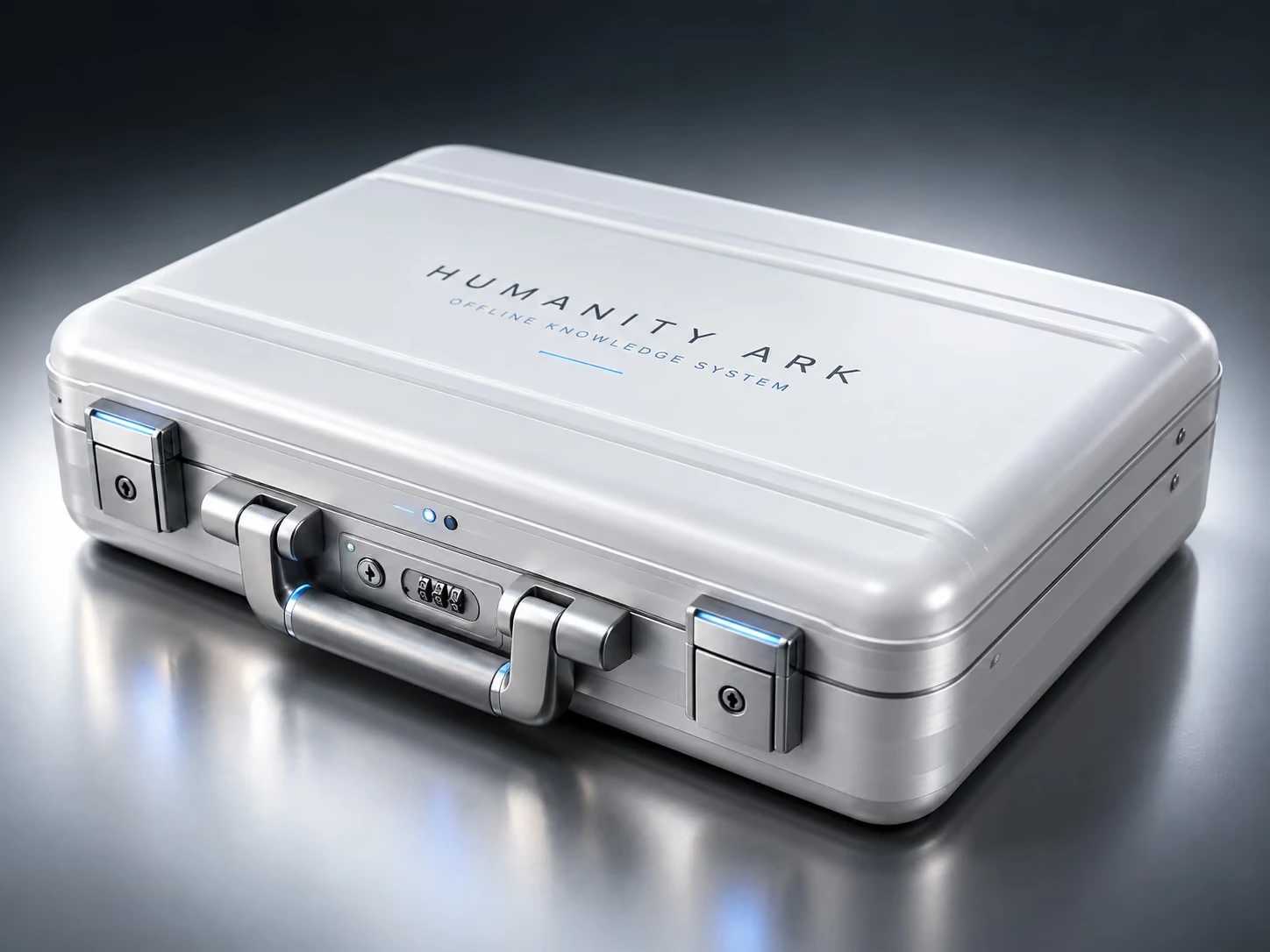
Humanity Ark is an early, open and international initiative exploring autonomous repositories of human knowledge that remain understandable and useful without the Internet, cloud infrastructure or an electrical grid. Its purpose extends beyond storing information: local, offline AI would help people understand available knowledge, identify needs, learn safely and follow step-by-step paths toward rebuilding capabilities. The proposed collection covers areas including water and sanitation, health, food and agriculture, engineering, governance, science, education, history and practical guides. The concept combines resilient hardware, efficient local AI models, redundant storage and independent energy, with a workflow in which people describe their situation and the system connects knowledge, dependencies and constraints into useful steps. The project proposes open contributions with controlled integration: changes would be reviewed, tested for integrity and safety, independently assessed and included in cryptographically identifiable releases. Distributed copies would remain recoverable, while consequential changes would require human review and the canonical system would be separated from local learning. Potential near-term uses include offline education for remote communities, knowledge access during disasters and field research away from cloud services. Humanity Ark says it is still being shaped and is seeking a multidisciplinary community before formal institutions are established.