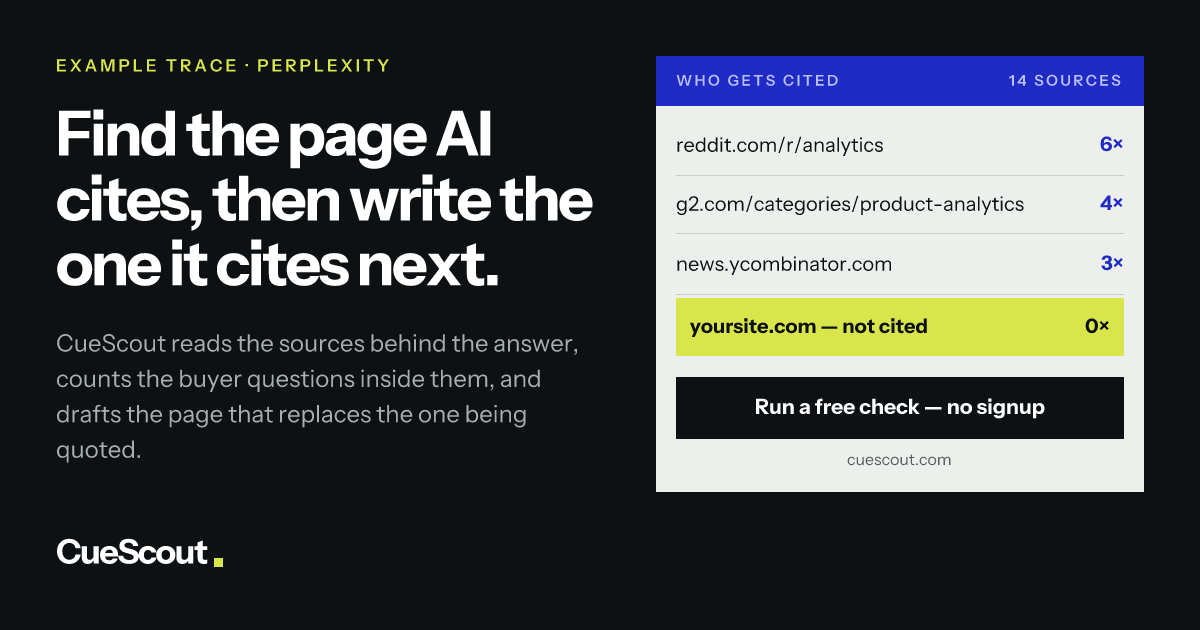
CueScout argues that counting brand mentions in AI-generated answers can substantially overstate visibility because a brand may be named without being recommended. The article separates four outcomes: recommended, listed only, dismissed, and absent; ordinary mention matching distinguishes only absence from the other three. To test a second reading of stored answers, CueScout ran a decision-model classifier through OpenRouter on 63 answers from ChatGPT, Perplexity, and Gemini. The system made 252 judgments in 7.3 seconds, costing $0.0033 in total, or about $13 per million judgments. It answered four structured questions per response: which brand the answer steered readers toward, whether it advised a choice, how the target brand appeared, and what source type influenced the answer. In the demo corpus, Mixpanel appeared in 100% of answers but was recommended in only 3.2%, while 52.4% of answers recommended nobody; BrightMetric was named in 63.5% and recommended in 44.4%. The author stresses that these percentages describe a fictional demo workspace rather than the product-analytics market, and that the measurements are not a benchmark. Brand mentions and citations remain based on string and URL matching, so changes remain explainable. The proposed audit focuses on cited roundup, comparison, and community pages that shape answers, rather than simply publishing more content on a company’s own site. The recommendation classifier’s threshold is provisional and may change with real data.