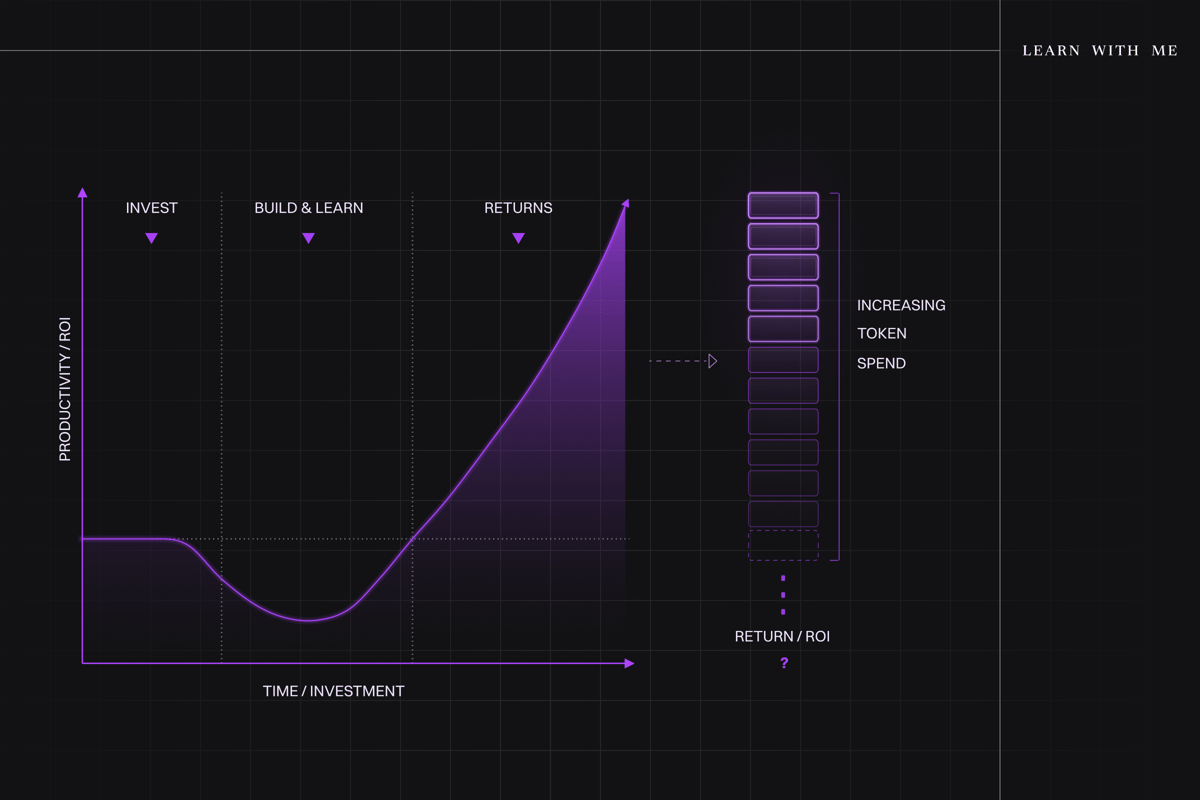
This essay examines why visible AI adoption and spending have not yet produced a corresponding rise in aggregate productivity. Ramp data cited in the article show that the median US business spends $12.50 per employee per month on AI, compared with average monthly employee costs of about $8,500. That means AI would need to improve productivity by roughly 0.15%, or about three productive minutes per week, to cover the direct software cost, although change management, retraining, and other organizational costs are harder to measure. The harder question is value: AI can accelerate production, but much of an employee’s time is spent in meetings, coordination, approvals, and waiting, so returned time may not become additional output. Examples from P&G and MIT research are used to argue that AI can produce large gains when work is structured so a person checks a completed chain of steps rather than every step individually. A 2026 experiment involving 515 startups found that most firms saw little revenue change, while nearly all gains came from the top 10%; firms shown how to reorganize around identical AI tools reached 1.9 times the revenue of the control group overall. The essay therefore argues that the differentiator is work redesign, not access to the tools alone. It applies the same logic to process automation: organizations should question requirements, delete unnecessary work, simplify what remains, speed it up, and automate only afterward. The historical comparison to the computer era suggests that economy-wide productivity may lag until businesses reorganize around a new technology. The article concludes by framing AI ROI as a question of process design, human oversight, task selection, and choosing when a cheaper model is sufficient.