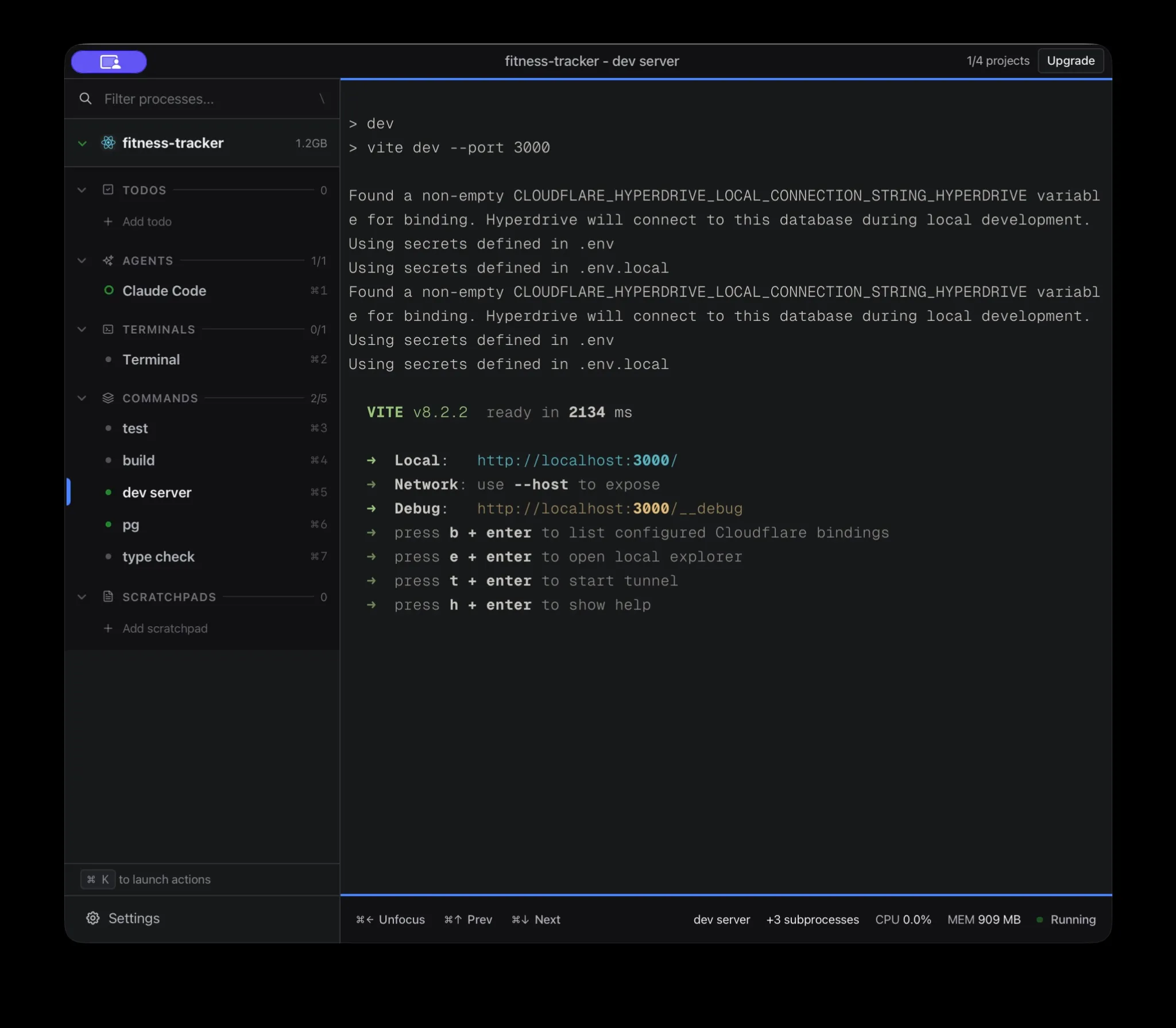
Solo is presented as a control panel for software projects that combines terminal management with deep integration for coding agents. It can make guesses about the commands a project needs, place them in dedicated terminal slots, and optionally start them automatically. In the example described, a TanStack Start application runs its development server and a Postgres process in Docker, with controls for starting, stopping, restarting, editing commands, and viewing terminal output. Solo can also launch configured agents such as Claude and Codex inside the same interface, while supporting other agents through its setup. Its built-in MCP server gives agents access to project tasks, other commands, and their output, which can be useful when diagnosing failures in an existing environment. However, the author found that merely enabling MCP did not change an agent's behavior: the prompt had to explicitly request use of Solo's MCP tools. To avoid repeating that instruction, the author created a manually invoked Claude skill named `solo-debug`; its configuration prevents automatic model invocation and directs the agent to inspect existing process output before starting new processes. The article also mentions scratchpads, to-dos, and broader AI orchestration workflows, while emphasizing that the process-management and MCP debugging features are only part of Solo's capabilities.