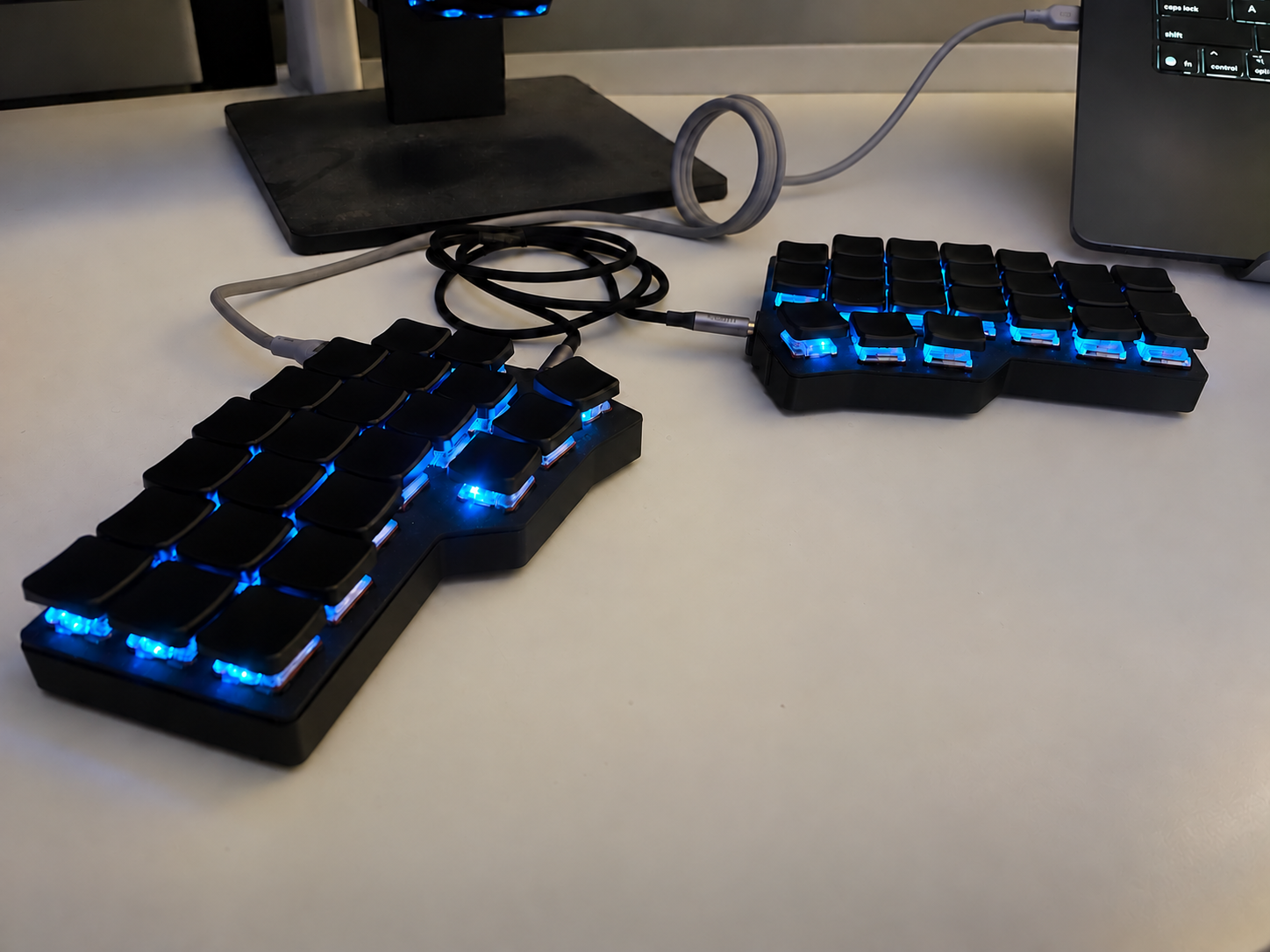
Rishabh Gupta documents an attempt to turn a conversation with AI into a physical split keyboard based on Foostan’s Corne. AI helped copy the PCB dimensions and key placement, design a printable enclosure, write and revise the tscircuit code, and generate the firmware. The project uses TypeScript and JSX, with reusable ChocKey components, coded connections, and manufacturing constraints represented in the design. tscircuit’s autorouter handled copper routes and vias for both halves; the author says it was quicker to iterate than a routing attempt with Astra that continued for more than three hours. The enclosure shares coordinates with the PCB, uses the board outline and mounting holes, and exports as separate STEP parts or an assembly for CAD and 3D printing. After checking the PCB and enclosure in 3D previews, the author sent PCBWay Gerbers, drill files, a grouped BOM, and pick-and-place data for a panel containing both halves. Each half was flashed over USB, connected through TRRS, and fitted with Choc switches and keycaps. The finished keyboard worked and reached 91 WPM with 99% accuracy in a typing test. The author’s role remained describing requirements, reviewing previews, and requesting corrections before fabrication.