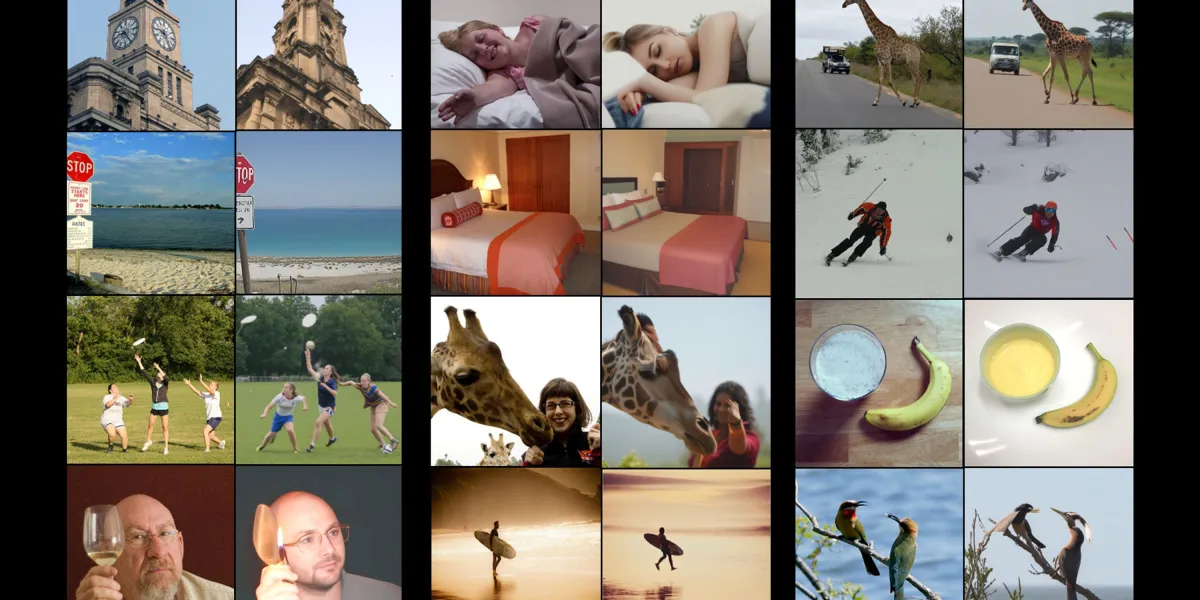
Researchers at the Weizmann Institute of Science have developed an AI system that can reconstruct an image a person is viewing from a high-resolution fMRI brain scan, and can also predict brain activity from an image. The system was trained using scans from eight people who each viewed about 9,000 images. Its brain decoder separates visual structure, such as color placement, from image content, then uses a diffusion model to produce the reconstruction. The researchers trained a second, reverse-direction encoder to predict brain activity from images and used the encoder and decoder together, allowing about 70% of the training images to come from sources that were not paired with fMRI scans. By combining several datasets, they identified brain regions that appeared to have shared functions across people. The resulting universal brain encoder is intended to work on a new person with about one hour of calibration, compared with roughly 40 hours typically reported for similar systems; the article notes that fMRI scanning can cost $600 to $1,000 per hour. In comparisons described by the researchers, the tool substantially outperformed previously reported systems, although it still produced clear errors, such as reconstructing a cake as sandwiches and a dog in a bathtub as a goat. The work was presented at the Cognitive Computational Neuroscience conference. The team hopes to extend the approach to video, audio, imagined content and dreams, and to explore communication for people with locked-in syndrome. Scientists caution that related methods could eventually expose mental imagery without consent, particularly if decoding moves from fMRI to easier-to-use EEG devices. The article says the current system requires cooperation inside a scanner, but researchers argue that improving models and EEG calibration could make mental privacy and possible commercial or legal misuse more urgent concerns.